Tag: Preventive Medicine

  • The Science of Routine: 5 Daily Habits That Prevent Chronic Disease

    The Science of Routine: 5 Daily Habits That Prevent Chronic Disease

    We often wait for a “health crisis” before we make a change. We wait for the high blood pressure reading or the pre-diabetes diagnosis to start taking our health seriously. But medicine is shifting from reactive to proactive.

    The most powerful “medicine” isn’t a pill you get from a pharmacy; it’s the series of small, repetitive actions you take every 24 hours. Here is the medical breakdown of the five daily habits that scientifically lower your risk of chronic disease.


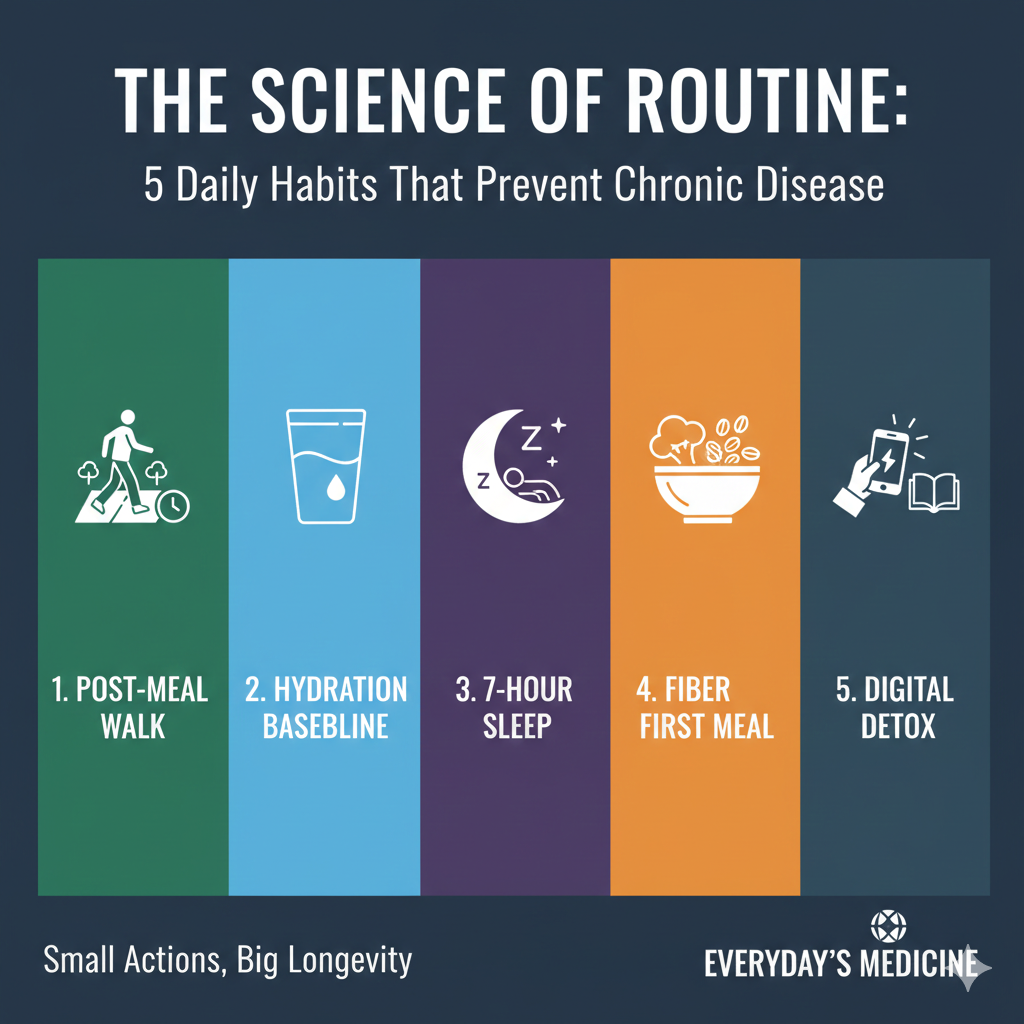
    1. The “10-Minute Post-Meal” Walk

    You don’t need to spend hours in the gym to protect your metabolism. Walking for just 10 minutes after a meal significantly blunts the “glucose spike.”

    The Medical Why: When you move your muscles immediately after eating, they “sponge up” the sugar in your blood without needing a massive surge of insulin. This prevents the insulin resistance that leads to Type 2 Diabetes.


    2. Master the “Hydration Baseline”

    Dehydration is often mistaken for hunger or fatigue. By the time you feel “thirsty,” your body is already 1-2% dehydrated, which can impair cognitive function and kidney efficiency.

    The Strategy: Aim for 30ml of water per kg of body weight. Proper hydration maintains blood volume, which keeps your resting heart rate (RHR) stable and your heart from working harder than it needs to.

    Daily Habits to Prevent Chronic Disease

    3. The 7-Hour Sleep Minimum

    Sleep is not “down time”; it is neurological and cellular repair time.

    The Medical Why: During deep sleep, your body undergoes “Glymphatic drainage”—essentially a brain-wash that clears out metabolic waste associated with Alzheimer’s. Furthermore, lack of sleep triggers the release of Cortisol, the stress hormone that causes the body to store dangerous visceral fat.


    4. Prioritize “Fiber First”

    Most people focus on what to remove from their diet. Instead, focus on what to add: Fiber.

    The Strategy: Eat a serving of fiber (vegetables, legumes, or whole grains) at every meal. Fiber acts as a “physical barrier” in the gut, slowing down the absorption of fats and sugars, which protects your heart and feeds your gut microbiome—the home of 70% of your immune system.


    5. Digital Detox Before Bed

    The “Blue Light” from your phone inhibits the production of Melatonin, the hormone that tells your body it’s time to sleep.

    The Strategy: Turn off screens 60 minutes before bed. Replacing scrolling with reading or meditation lowers your heart rate and prepares your body for “Rest and Digest” mode (the Parasympathetic Nervous System).


    Conclusion: Small Wins, Big Longevity

    You don’t have to change your entire life today. Pick one of these five habits and master it this week. Consistency is the secret ingredient that turns “actions” into “health.”

    Track Your Progress: Use our [Medicine & Health Tracker] to stay on top of your daily routines and medication schedules.
  • Beyond the Scale: 4 Essential Health Metrics to Track for Longevity

    Beyond the Scale: 4 Essential Health Metrics to Track for Longevity

    In the world of health and fitness, we often obsess over one single number: Weight. We step on the scale every morning, letting that number dictate our mood and our progress. But modern medicine tells a different story. Weight alone is a “noisy” metric that doesn’t account for muscle mass, bone density, or—most importantly—where your body stores fat.

    If you want a true picture of your internal health, you need to look at the numbers that actually matter to your heart, your metabolism, and your long-term wellness.


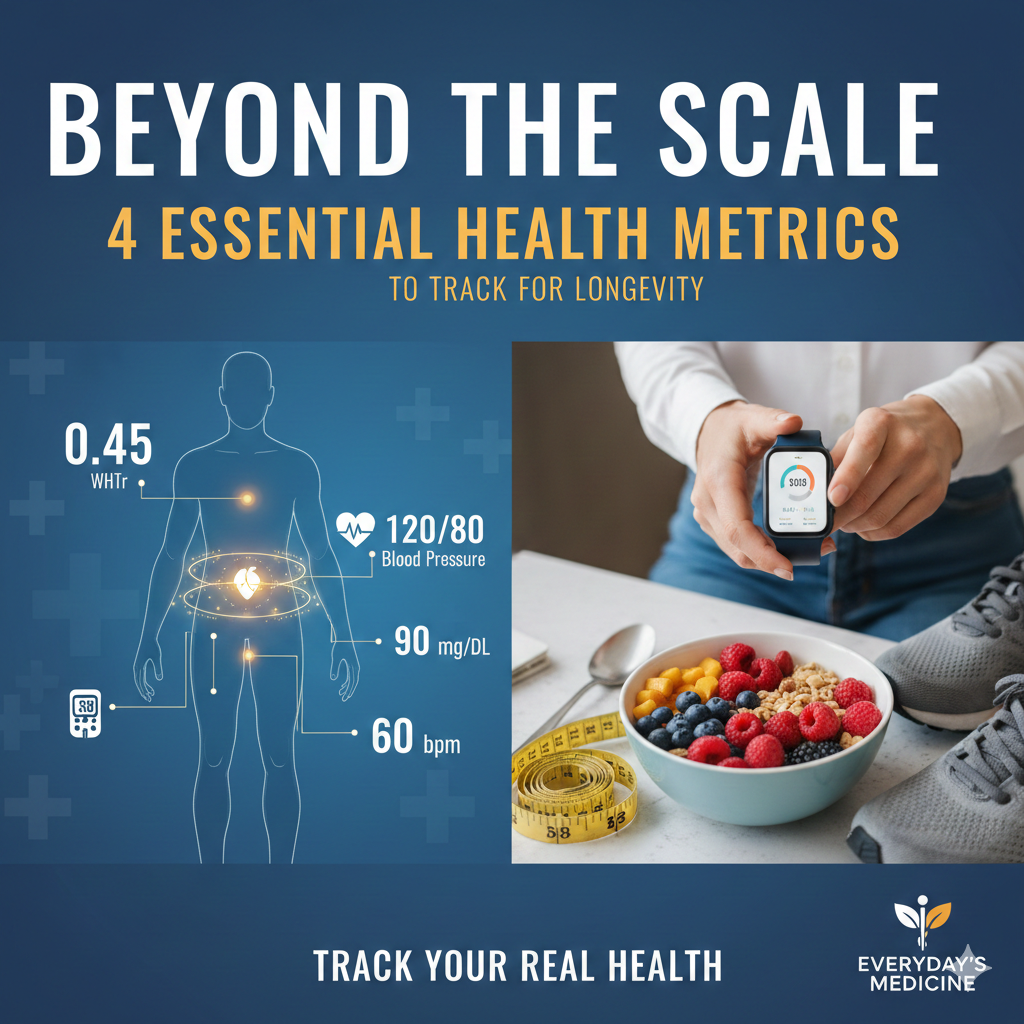
    1. Waist-to-Height Ratio (WHtR): The Heart-Health Gold Standard

    While the Body Mass Index (BMI) is a useful starting point, many cardiologists now prefer the Waist-to-Height Ratio.

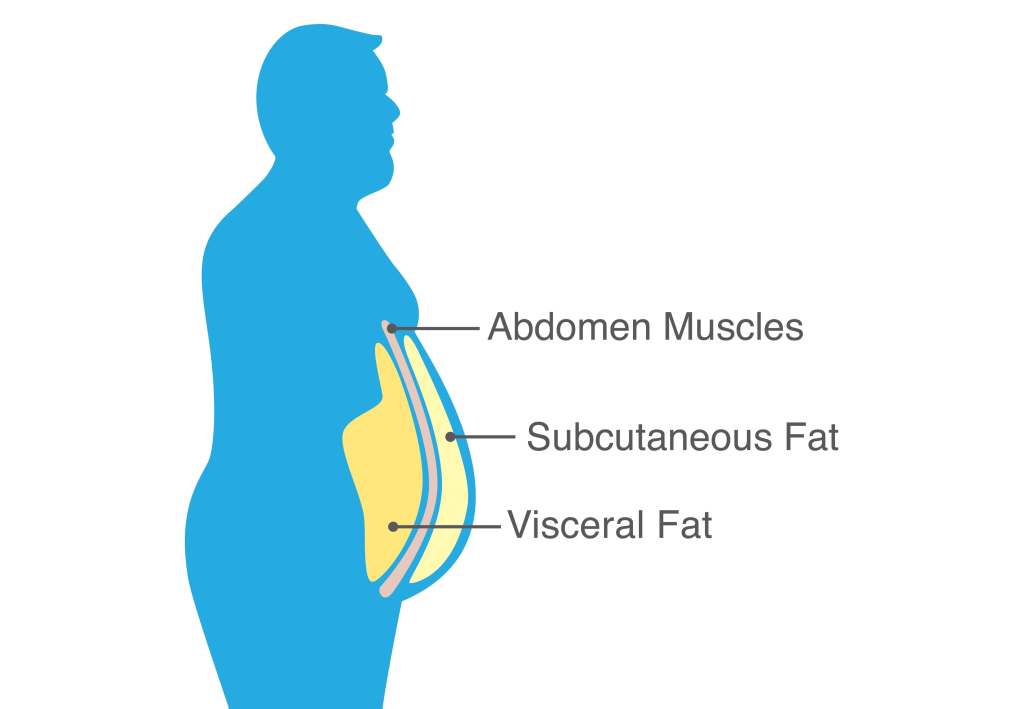
    Why it matters: This number measures “central adiposity” (belly fat). Unlike fat on your hips or arms, abdominal fat is metabolically active; it surrounds your vital organs and releases inflammatory chemicals that increase the risk of Type 2 Diabetes and Heart Disease.

    • The Goal: Keep your waist circumference to less than half your height.
    • The Formula: $\text{Waist (cm)} \div \text{Height (cm)} = \text{WHtR}$
    • The Interpretation: A ratio of 0.5 or higher suggests an increased risk of cardiovascular complications.

    2. Blood Pressure: The “Silent” Metric

    High blood pressure (Hypertension) often has no symptoms until it causes a major event like a stroke or heart attack.

    Understanding the numbers:

    • Systolic (Top number): The pressure in your arteries when your heart beats.
    • Diastolic (Bottom number): The pressure in your arteries when your heart rests between beats.
    CategorySystolic (mmHg)Diastolic (mmHg)
    NormalLess than 120and Less than 80
    Elevated120 – 129and Less than 80
    Hypertension Stage 1130 – 139or 80 – 89

    3. Fasting Blood Glucose

    This number measures the sugar (glucose) in your blood after you haven’t eaten for at least 8 hours. It is the primary indicator of how well your body is processing carbohydrates and how sensitive you are to insulin.

    • Normal: 70 to 99 mg/dL.
    • Prediabetes: 100 to 125 mg/dL.
    • Diabetes: 126 mg/dL or higher on two separate tests.

    4. Resting Heart Rate (RHR)

    Your RHR is the number of times your heart beats per minute while you are at complete rest. It is a direct reflection of your cardiovascular fitness and autonomic nervous system health.

    • Athletic/Highly Fit: 40–60 bpm.
    • Average Adult: 60–100 bpm.
    • Why it matters: A consistently high RHR (over 100 bpm) can indicate that your heart is working too hard or that you are under significant chronic stress.

    Conclusion: Take Control of Your Numbers

    Health isn’t about being “thin”; it’s about being metabolically healthy. By tracking these four metrics, you can catch potential issues years before they become medical emergencies.

    Ready to see where you stand? Use our [Advanced Health Calculator] to check your BMI and Waist-to-Height Ratio instantly.